Start with WhyWhy some people and organisations inspire loyalty while others, offering much the same, do not.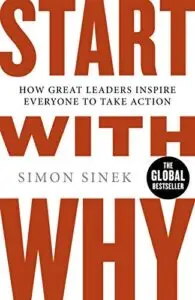
Sinek's starting point is a simple pattern he calls the Golden Circle: three rings, with Why at the centre, How around it and What on the outside. Most organisations can say what they do, and many can say how they do it, but far fewer can say why: what they believe, and why anyone should care.
His argument is that people respond to the why first. He links this to how the brain works: trust, loyalty and decisions are driven by the part of the brain that deals with feelings rather than language, which is why a choice can feel right before we can explain it. He illustrates the idea with Apple, Southwest Airlines, the Wright brothers and Martin Luther King, who, as he points out, said "I have a dream", not "I have a plan".
He also looks at what happens when the why fades, for example as a founder steps back and a business drifts into competing on price, promotions and novelty. Those tactics can win a sale, he says, but they rarely earn loyalty.
It is worth reading because it asks a question every business owner can only answer for themselves: what do I actually stand for? Answering it honestly tends to clarify much else, from who you want to work with to how you describe what you do.
How to Double Your Profits Within the YearA practical action plan for lifting profits by improving many ordinary parts of a business at once.
First published in 1981, the book sets out a programme for improving a business's profits within twelve months. Rather than resting on a single big idea, it argues that profits can be roughly doubled through modest investments of time and effort in the parts of a business that are usually overlooked, by improving efficiency, performance and morale.
It is written in an unusual way: as an action plan sent by the managing director of a fictional company to his senior managers. That keeps it practical and direct, with instructions rather than theory.
The book identifies thirty "treatment areas": thirteen ways to reduce costs, six ways to raise prices and reduce discounting, and eleven ways to increase sales without losing margin. Along the way it looks at which customers are the most profitable, recruitment, production efficiency, advertising budgets and control of the sales force. Each section ends with a self-assessment chart, so the reader can track what has been planned and what has been achieved.
It is worth reading because it shows that lasting improvement usually comes from steady attention to many small things rather than one clever framework, and because the memo style makes it easy to turn the ideas into actions for your own business.
Purple CowWhy being remarkable now matters more than being very good.
The title comes from a car journey through France. Fields of cows are charming at first, Godin observes, but after a while they become invisible. A purple cow, on the other hand, would make you stop and look.
His argument is that the old approach to marketing, making an average product for as many people as possible and advertising it heavily, no longer works as it once did. People have more choice than they can deal with and have learned to ignore advertising. What gets noticed is something worth talking about: remarkable, in the literal sense of being worth a remark.
So, he suggests, marketing belongs in the product or service itself rather than in what is said about it afterwards. He encourages businesses to aim first at the smaller group of people who look for something new and tell others about it, and argues that playing safe, being merely very good, has become the risky choice.
It is worth reading because it challenges any business to ask what, if anything, people would mention about it to a friend. For a small business without a large marketing budget, that question is more useful than most advertising advice.
A Diary of DeceitA small business owner’s diary of nearly ten years under HMRC scrutiny, told from his side of the table.
In this first-hand account, Paul Donaldson describes a dispute with HMRC that ran for nearly a decade, from the point his small business came under investigation through to a Tribunal hearing. It is written from his side, drawing on his own records, letters and recollection of events.
The book follows the process as he experienced it: unannounced inspections, a long run of correspondence, and the preparation for and conduct of the hearing. Throughout, from the first inspection to the Tribunal itself, he had no one representing him. Alongside the procedural story, it describes the emotional and financial strain of running a small business while defending his position, and the effect on his livelihood and reputation.
It is one person's account, and the title reflects how he came to see events. Readers will form their own view; what the book offers is a detailed record of how an investigation can feel from the inside, and of what it takes to see one through.
It is worth reading because it shows, more vividly than any guidance note, why good records, careful replies and early advice matter when a business comes under scrutiny, and how heavily an investigation can weigh on the person at the centre of it.
AI Snake OilA calm, clear guide to telling what AI can genuinely do from what is being oversold.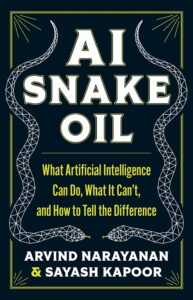
Written by two computer scientists, Arvind Narayanan of Princeton University and Sayash Kapoor, the book sets out to help ordinary readers make sense of AI and see through the hype. Its title borrows the old idea of the travelling cure-all: products that promise a great deal and do not work.
Their central point is that "AI" covers very different things. Generative AI, the kind behind tools such as ChatGPT, can be genuinely useful, though it has real limitations. AI that claims to predict what people will do, used in areas such as hiring, lending, insurance and criminal justice, is where they find many of the claims that do not stand up, and where real harm is already being done.
They also look at why exaggerated claims spread, from companies and researchers through to the media, and take a measured line on the bigger fears. They argue that AI is not an existential threat in itself, and that how people choose to use it is the greater concern.
It is worth reading because it gives a sensible way to judge any AI claim: ask what kind of AI it is, and whether there is evidence that it works. That is reassuring for anyone who feels left behind by the subject, and protective for anyone being sold an AI product.
Co-IntelligenceA practical, level-headed guide to working alongside AI as a capable but imperfect colleague.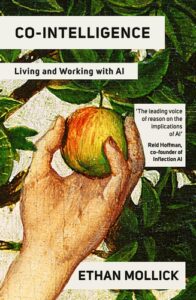
Ethan Mollick is a professor at the Wharton School of the University of Pennsylvania who studies innovation and has spent a great deal of time testing AI tools in real work and teaching. Published in 2024, the book is written for ordinary readers rather than technical specialists.
His central idea is that AI works best as a kind of co-intelligence: something to think and work with, rather than a machine that simply produces answers. He sets out four simple principles: always invite AI to the table to see what it can help with; be the human in the loop, checking and taking responsibility for the result; treat it like a person, but tell it what kind of person it should be; and assume that the AI you are using today is the worst you will ever use.
He then looks at AI in different roles, as a creative partner, a co-worker, a tutor and a coach, and is candid about its weaknesses: it can be confidently wrong, and it is good at some tasks and surprisingly poor at others, often in ways that are hard to predict.
It is worth reading because it offers a calm, practical starting point for anyone wondering how to use AI in their own work, and it pairs well with AI Snake Oil: one on what AI can usefully do, the other on what it cannot.
The Art of CommunityA practical handbook for building and running a community that people want to belong to.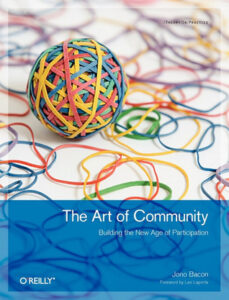
Jono Bacon wrote the book from his experience as community manager for Ubuntu, the free computer operating system that depends on thousands of volunteers around the world. First published in 2009, it sets out what he learned about bringing people together around a shared purpose and keeping them involved.
His starting point is that a community is built on a sense of belonging, not on a membership list. From there he works through the practical side: setting a clear mission, creating simple processes that make it easy for people to contribute, communicating openly, running events, and judging whether a community is actually healthy.
He gives a good deal of space to the less comfortable parts too: governance, handling conflict and difficult personalities, and avoiding burnout among the people who carry most of the load. Although his examples come largely from open source software, the lessons carry readily across to charities, member organisations and local groups. It is not to be confused with Charles Vogl's book of the same name, which is also on this list.
It is worth reading because anyone who chairs a committee, runs a group or relies on volunteers will recognise the problems he describes, and will find practical ways of handling them that go well beyond goodwill.
ClickWhat millions of people search for online, and what that reveals about how they really behave.
Bill Tancer led research at Hitwise, a company that measured how millions of people used the internet. In Click, published in 2008, he uses that data to look at what people actually do online, rather than what they say they do when asked.
His examples range widely. Searches for prom dresses, for instance, begin months before the event, far earlier than retailers might assume, and the fears people type into search engines say a good deal about their private worries. Each example shows how patterns of searching and clicking can anticipate demand and reveal behaviour that surveys miss.
The book was written before smartphones and social media became so dominant, so some of the detail has dated. The underlying idea has not: what people search for is an honest record of what is on their minds, and it often runs ahead of what they go on to buy.
It is worth reading because it encourages any business to look at evidence of behaviour before assumption, and to ask what its own clients are searching for at the moment they first realise they have a need.
The Art of CommunitySeven principles that explain why some groups create a real sense of belonging and others never do.
Published in 2016, the book asks a simple question: what makes people feel they genuinely belong to a group? Charles Vogl answers it by looking at what strong communities, old and new, have in common, drawing on a background that ranges from the Peace Corps to the study of religious traditions.
He describes a community as a group of people who share a concern for one another's welfare, and sets out seven principles that help one hold together: a clear boundary between members and others; an initiation that marks someone's arrival; rituals that give shared moments meaning; a temple, or place where members meet; stories that carry the group's values; symbols that people recognise; and inner rings, which give members something to grow towards.
The book is short and practical. Its emphasis is on strengthening the shared values that already exist rather than on techniques for manufacturing loyalty. It is not to be confused with Jono Bacon's book of the same name, which takes a more operational approach.
It is worth reading because it gives a vocabulary for something many people sense but find hard to describe, and it is useful to anyone looking at how a charity, team, membership body or client relationship holds together.
PurposeA personal account of finding your purpose, from an unpromising start to a life built on your own terms.
Jessica Huie writes from her own story. She became a mother as a teenager, was expelled from school and lived for a time in a hostel. She went on to a career in public relations of more than twenty years, founded two award-winning businesses and was appointed MBE.
The book describes how she moved from feeling unhappy and without direction to building her life and work on what she calls an authentic foundation. Her argument is that purpose is found by looking inward, at who you are and what matters to you, rather than by following other people's expectations or measures of success.
Alongside her own experience, she offers practical tools for getting unstuck and making real change, written in a warm and direct style.
It is worth reading because it shows that purpose is not reserved for those who start with advantages, and because the question it asks, what am I here to do, sits close to the why behind any business or career.
The Tipping PointHow small changes, the right people and the right conditions can make an idea spread like an epidemic.
Gladwell's question is why some ideas, products and behaviours suddenly take off while others never do. His answer, first published in 2000, borrows from the way epidemics spread: change often happens not gradually but all at once, once a certain point is reached.
He identifies three things that matter. The Law of the Few: a small number of people, whom he calls Connectors, Mavens and Salesmen, have an outsized influence on what spreads. The Stickiness Factor: the way a message is put across can decide whether it is remembered. And the Power of Context: people are more sensitive to their surroundings than we tend to assume.
His examples include the sudden revival of Hush Puppies shoes, Paul Revere's ride, children's television and the fall in crime in New York in the 1990s. Some of his conclusions, particularly about crime, have since been questioned, and Gladwell returned to the subject himself in Revenge of the Tipping Point in 2024.
It is worth reading because it makes you think about who really influences your clients and customers, and how small, well-placed changes can have far more effect than large, expensive ones.
Radical CandorHow to give honest feedback that helps people, without being either harsh or evasive.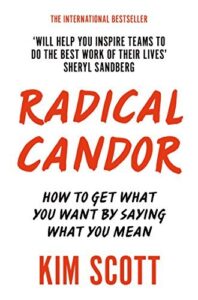
Kim Scott draws on her experience as a manager at Google and Apple, and on her own mistakes along the way. Her subject is the working relationship between a manager and their team, and in particular the conversations most of us would rather avoid.
The book is built around two simple ideas: care personally and challenge directly. Doing both is what she calls radical candor. Challenge without care becomes obnoxious aggression; care without challenge becomes ruinous empathy, where people are never told what they need to hear; and doing neither is manipulative insincerity.
She suggests that ruinous empathy is the most common failing, because most people mean well and dislike conflict. The book then turns to practical matters: asking for criticism before giving it, making praise specific, and building a team where people feel able to speak openly.
It is worth reading because the same principles apply well beyond management, to clients, colleagues and boards, wherever an honest conversation is kinder in the long run than a comfortable one.
The Courage to Be DislikedThe ideas of Alfred Adler, set out as a conversation about how to live freely and contribute to others.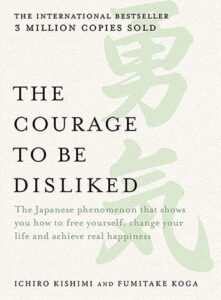
First published in Japan in 2013, the book is written as a dialogue over five nights between a philosopher and a sceptical young man who is unhappy with his life. Through their conversation, the authors introduce the psychology of Alfred Adler, a contemporary of Freud whose ideas are less widely known.
Its central claims are bold. Adler held that we are not determined by our past, that what matters is what we choose to do with our experience, and that all problems are, at root, problems of relationships with other people. From this follow ideas such as the separation of tasks: being clear about what is your responsibility and what is someone else's, and not living simply to meet other people's expectations.
The title comes from the conclusion that freedom means accepting that not everyone will approve of you. That is not an argument for selfishness: Adler's idea of community feeling, and of finding worth through contributing to others, runs through the whole book.
It is worth reading because it offers a practical and hopeful way of thinking about relationships, responsibility and change, whether at work, in a business or in community life.
Unleashing the IdeavirusWhy the ideas that spread are the ones people choose to pass on to each other.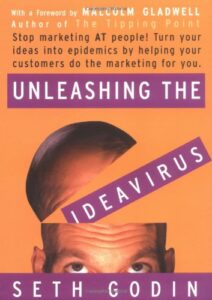
First published in 2000, the book was an experiment in its own argument: Godin made it available free online, and readers downloaded it and passed it on in very large numbers.
His argument is that marketing which interrupts people is becoming less effective, and that the ideas which succeed are the ones people spread for themselves, like a virus. The key figures are what he calls sneezers: people who tell others about an idea, whether because they are trusted or simply because they are well connected.
He looks at what helps an idea spread: how easy it is to pass on, how many people it reaches, how quickly, and how long it lasts. Some of the examples belong to the early days of the internet, but the thinking anticipated much of what later became word-of-mouth and social media marketing.
It is worth reading because it asks whether a business is something people would choose to talk about, and makes it easier to see why recommendation, not advertising, brings most small businesses their best clients.
We Are All WeirdThe end of the mass market, and why serving people who choose to be different is now the opportunity.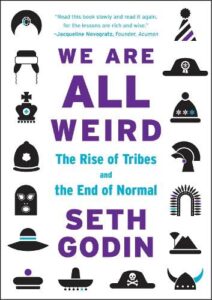
In this short book, published in 2011, Godin argues that the era of the mass market, when businesses made one product for the average person and persuaded everyone to buy it, is coming to an end.
For much of the twentieth century, he says, that approach worked because people had limited choice and were encouraged to fit in. Now that people can find others who share their interests, however particular, more of them are choosing to be "weird": not strange, but different from the norm by choice, and part of groups that reflect who they are.
For organisations, his conclusion is that trying to please everyone produces something that pleases no one in particular. The better course is to respect people's differences and serve a group that cares about what you do, rather than chase the middle of the market.
It is worth reading because it gives a small business permission to stop trying to appeal to everyone, and encourages it to be clear about the people it is really for.
The Pause PrincipleWhy stepping back to reflect is often the quickest way for a leader to move forward.
Kevin Cashman, a long-standing adviser on leadership development and author of Leadership from the Inside Out, starts from the pressure most leaders feel: a world that is volatile, uncertain and complex, and a constant demand to act faster.
His argument is the paradox in the subtitle: step back to lead forward. Pausing, in his sense, is not inactivity but a deliberate step back to reflect, ask better questions and gain perspective before acting. He sees it as a source of innovation and real growth rather than a delay.
The book applies the idea at three levels: pausing to grow your own leadership, pausing to help others grow, and pausing to build cultures in which innovation can happen.
It is worth reading because many business owners and board members are so busy with what is in front of them that they rarely stop to think about where they are heading, and the book makes a strong case for doing exactly that.
TribesWhy anyone can now lead a group of people who share an idea, and why more people should.
Published in 2008, the book defines a tribe as a group of people connected to one another, to a leader and to an idea. People have always formed tribes, Godin says, but the internet has made it far easier to find and connect those who care about the same thing.
His argument is that this creates an opportunity, and a responsibility, to lead. Leadership in his sense is not management or position: it is about challenging the way things are, connecting people and giving them something to believe in. What holds most people back, he suggests, is not lack of ability but fear of criticism and failure.
The book is short, written in brief sections, and full of examples of people who started something from small beginnings. It is more a call to action than a manual.
It is worth reading because it encourages anyone with a cause, in a business, a charity or a community, to stop waiting for permission and start leading the people who already share it.
BounceThe case that excellence comes from practice and opportunity rather than innate talent.
Matthew Syed was for many years England's number one table tennis player and competed at two Olympic Games. In Bounce, published in 2010, he asks why he and so many other top players came from a single street in Reading.
His answer is not talent. The area happened to have an exceptional coach and a club that was open around the clock, giving its young players thousands of hours of practice. From there he builds a wider argument, drawing on research into expertise, that high performance comes mainly from long, purposeful practice: practice that stretches you and gives you feedback, rather than simple repetition.
He also looks at the mind: how belief affects performance, why skilled people sometimes choke under pressure, and how praising effort rather than talent encourages people to keep improving.
It is worth reading because it challenges the idea that ability is fixed, which has implications for how we see ourselves, how we develop people in a team, and how we approach any new skill in business.
Cover images via Open Library, Goodreads and Amazon. Book covers are the copyright of their publishers.